Last updated: October 25, 2026
Key Takeaways
- Stop the water early, then check bowl level before you try any fix.
- A toilet plunger builds pressure; use steady force, not hard pounding.
- Hot water and dish soap can help with soft clogs if you want a low-force start.
- Reach for a toilet auger after a few careful plunging rounds fail.
Quick Answer
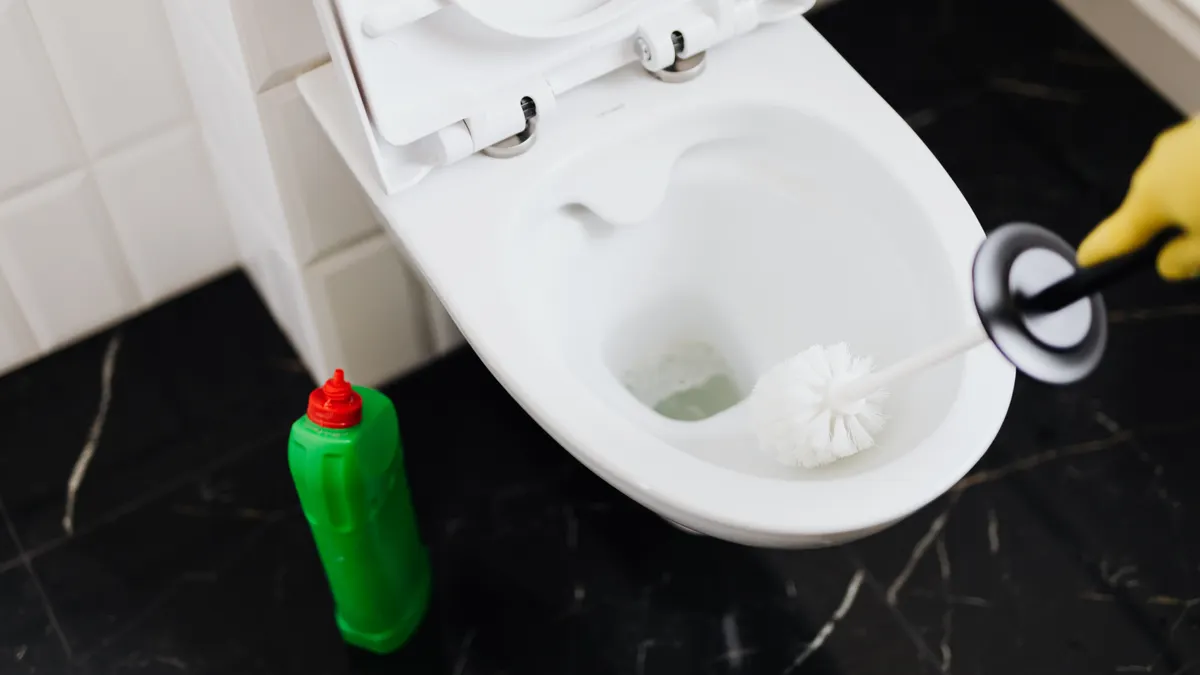
A toilet can often be unclogged without damage in 10 to 30 minutes using a toilet plunger, hot water and dish soap, or a toilet auger. Start by stopping more water from entering the bowl, then try the gentlest method that fits the clog.
I’ve seen plenty of bathroom backups that looked ugly and still cleared cleanly. A toilet clog is usually fixable without harming the bowl, the seal, or the finish if I start with a toilet plunger, use gentle pressure, and avoid chemicals. The point is simple: clear the blockage, keep the toilet bowl from overflowing, and stop before a small clog turns into a mess that needs a toilet auger or a plumber. This guide covers how to unclog a toilet without damaging it.
What to do first when a toilet is clogged
Start by stopping more water from entering the bowl and checking how high the water is. If the bowl is already near the rim, lift the tank lid and close the shutoff valve behind the toilet by turning it clockwise. That buys time and keeps the overflow from getting worse.
Below the rim? Do not flush again right away. One extra flush can push the blockage deeper or send water onto the floor. Put on rubber gloves and look at the bowl first. A clog from too much toilet paper often sits close to the trap and clears with a plunger in under a minute or two. A clog caused by a child’s toy, a thick wad of wipes, or a hard object usually needs more patience and may not move with plunging alone.
A flange-style toilet plunger is usually the better first tool, not a flat sink plunger. The flange helps seal the toilet bowl opening, which matters because air leaks make plunging less effective. No flange? Try the hot water and dish soap method below before you start forcing anything.
Keep a bucket of clean water nearby only if the bowl is low enough that adding water will not overflow it. Have towels ready. Once the toilet starts to drain, do not rush to flush. Wait and watch the water level settle first.
How to unclog a toilet with a plunger
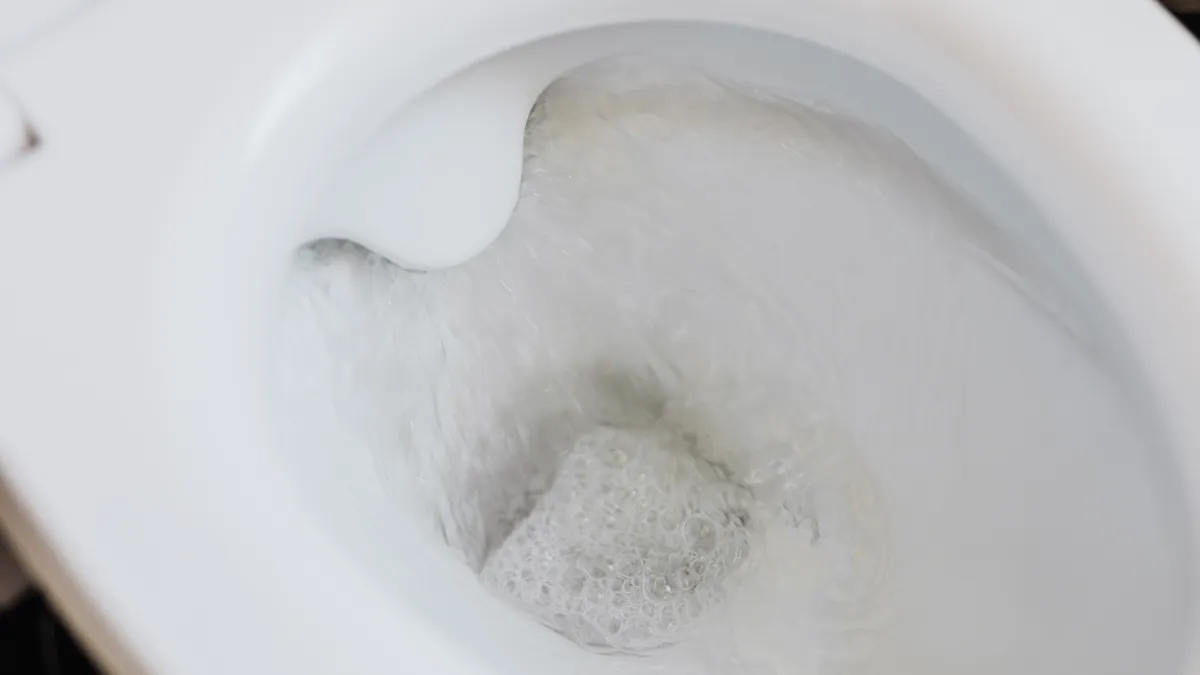
Use a toilet plunger to build pressure in the bowl, not to smash the blockage apart. Put the plunger’s cup over the drain opening so it covers the hole completely and stays under water. If the bowl water is too low to cover the cup, add enough warm water to submerge the rubber edge by a few inches.
Push down slowly at first to force out trapped air, then pull up with equal force. That motion matters more than brute strength. Do 10 to 15 steady pumps, keeping the seal intact. If the water starts to drop, you should see the bowl level fall and the drain gurgle. That is the sign the clog is moving.
Nothing changing after about 30 seconds? Break the seal, reposition the plunger, and try again. A poor seal is a common reason this fails. Angle the cup slightly at first if the bowl shape makes the seal tricky, then center it once it grips.
Stop if the water rises close to the rim during plunging. That usually means the blockage is loosening but not fully open yet. Give it a minute to settle, then try another short round. Once the bowl drains normally, flush only once to confirm the line is clear. If the flush is weak or the bowl refills slowly, the clog may be farther down the trap or in the drain line.
A plunger is the right tool for paper clogs and soft waste. It is not the right tool if the toilet has a hard obstruction, if the water backs up in other fixtures, or if plunging only makes the bowl slosh without improving drainage. That mismatch is where frustration sneaks in.
Can hot water and dish soap unclog a toilet?
Yes, hot water and dish soap can loosen a soft toilet clog when you want a low-force method first. This works best for paper buildup and greasy residue, not for hard objects. It is a good option if the bowl is not close to overflowing and you want to avoid aggressive plunging.
Pour about 1/2 cup of liquid dish soap into the bowl and let it slide toward the drain. Wait 10 to 15 minutes so the soap can coat the clog and reduce friction. Then pour in a bucket of hot water, not boiling water. A common safe target is hot tap water that is comfortable to handle, not water straight from a kettle. Boiling water can crack porcelain or stress a wax ring on older toilets.
Pour from waist height and aim into the center of the bowl to avoid splashing. After 10 more minutes, watch for the water level to drop. If the bowl begins to drain, flush once. If it does not move after a full 20 to 30 minutes, stop repeating the method and switch to plunging or an auger.
Gentle, yes; magic, no. It will not remove a toy, a toothbrush, or a large wad of wipes. It can also fail if the clog sits deep in the trap. If the bowl is already near the top, do not add more liquid. Use the shutoff valve first and wait for space in the bowl.
How to use a toilet auger when plunging fails
Use a toilet auger when a plunger cannot clear the clog after a few careful rounds. A toilet auger, sometimes called a closet auger, is made for the curved toilet trap and is safer for porcelain than forcing a standard drain snake into the bowl.
Insert the rubber or metal guard into the bowl so the bent tube follows the trap opening. Turn the handle clockwise while feeding the cable forward. If you feel resistance, keep turning gently rather than jamming it. The cable tip may break through the blockage or grab it. When it does, the handle usually turns more easily and the bowl level may drop.
Do not extend the cable aggressively. A toilet auger is designed for short, controlled travel through the trap, not for full drain-line work. If it hits a firm stop and will not budge after a few turns, the blockage may be beyond the toilet itself. That is a point to stop, not to force.
Pull the cable back slowly after you think the clog has broken loose. Then flush once. If the bowl drains but the water rises again on the next flush, the blockage is likely farther down the branch line. At that stage, the toilet may be the symptom, not the whole problem.
This tool is useful for a clog that resists plunging, but it is not a fix for every backup. It is also not the tool to use if the toilet is already cracked, loose at the base, or rocking on the floor. In that case, forcing a cable can make the damage worse.
What to avoid if you do not want to damage the toilet
Avoid chemical drain cleaners in a toilet bowl. They can splash back, damage older porcelain finishes, and create a harsh mix if you later plunge or use hot water. They also do little against paper clogs in the toilet trap and are a poor choice for hard blockages. A bottle being sold as a drain opener does not make it safe for every toilet.
Do not use boiling water. Porcelain can handle a lot, but sudden thermal shock is not worth the risk, especially on older toilets or cold bowls. Use hot water from the tap or a bucket that is hot to the touch but not scalding.
Do not keep flushing. Each flush adds more water to the bowl and can overflow onto the floor. If the toilet has already been flushed once and the water did not go down, stop there until you try a plunger or close the shutoff valve.
Do not use wire hangers, sharp rods, or random hooks. They can scratch the bowl, chip glaze, or jam the clog deeper. A toilet auger is shaped for this job; improvised tools are not.
Do not force the tank lid or the fill parts. If you close the shutoff valve, turn the handle gently. The valve is there to stop incoming water, not to be cranked hard. If it resists, let it sit a moment and try again rather than twisting until something breaks.
How to tell the clog is gone and the toilet is safe to use
The clog is gone when the bowl drains at a normal speed and the water level returns to its usual position after one flush. After that, wait about 5 minutes and flush again. If the second flush behaves normally, the toilet is likely clear.
Watch for three signs that matter: the bowl water should drop promptly, the refill should sound normal, and there should be no gurgling from nearby drains. Slow refill or repeated bubbling means the blockage may still be partly there. A bowl that looks clean does not always mean the line is fully open.
If the clog cleared after the plunger or auger, do one more quick check with a small amount of toilet paper. Use only a little. A healthy toilet should move that through without backing up. Do not test with a full roll’s worth or with wipes.
If the water level in the bowl keeps creeping up on its own, or if flushing causes another fixture to burp or back up, the issue may be beyond the toilet itself. That is the point where the blockage points to a larger plumbing issue rather than a simple toilet clog.
For a broader set of drain care topics, the drain cleaning hub is a useful next stop once the toilet itself is no longer the only problem.
When a toilet clog points to a bigger plumbing problem
A toilet clog points to a bigger plumbing problem when the toilet is only one of several fixtures acting up, when the clog returns quickly, or when you cannot clear it with a plunger and toilet auger. Those patterns suggest the blockage may be in the branch drain or the main sewer line rather than just inside the toilet trap.
If water backs up in the tub, shower, or sink when the toilet is flushed, stop treating it as a simple toilet clog and consider calling a professional. That is not normal. It means wastewater is struggling farther downstream. A single toilet issue usually stays local to the toilet bowl.
Clogs that come back after a normal flush often mean something is stuck in the trapway or lodged deeper in the line. Repeated plunging may only buy a few hours. In that case, the problem is not the bowl; it is the line feeding the bowl. That can require a longer cable, inspection, or professional drain cleaning.
A clogged toilet that overflows repeatedly or drains very slowly even after the trap clears also deserves caution. The fixture may be partially blocked by mineral buildup, a damaged flapper causing odd flush behavior, or a venting issue that makes the flush weak. Those are not problems a plunger can solve. See the toilet flapper replacement guide and the toilet repair guide for related fixes.
I would not keep escalating with chemical cleaners or repeated force once the toilet has failed twice. That wastes time and raises the chance of mess. If the blockage seems larger than paper, if multiple fixtures are involved, or if the toilet was already near overflowing, a plumber is the safer next step. For system-wide issues, the drain cleaning guide can help you decide what to check next.
Can I use hot water to unclog a toilet?
Yes, hot water can help loosen a soft clog if it is not near the rim. Use hot tap water or water that is hot but not boiling, and pair it with dish soap for better slip. Do not use boiling water, because porcelain can crack and older seals can be stressed by the heat. For more on safe water temperature, the EPA WaterSense guidance is a useful reference.
When should I use a toilet auger?
Use a toilet auger after a plunger fails to move the clog after a few careful attempts. It is the better tool for stubborn blockages in the trap, especially when the toilet holds water but will not drain. If the auger meets a hard stop or the blockage returns immediately, the problem may be deeper. The how to use a toilet auger guide has more detail.
Should I keep flushing a clogged toilet?
No, I should not keep flushing a clogged toilet. Each flush adds more water to the bowl and increases the chance of overflow. If the first flush did not clear it, close the shutoff valve and switch to a plunger, dish soap and hot water, or a toilet auger instead. The clogged toilet solutions page covers those steps in more detail.
When is a clogged toilet an emergency?
A clogged toilet is an emergency when water is close to overflowing, sewage is backing up into other fixtures, or the toilet is leaking onto the floor and cannot be stopped. Shut off the water at the valve and avoid more flushing. If wastewater is rising from multiple drains, the problem may be larger than the toilet itself. If you are unsure, call a plumber right away.
Drafted with AI; not yet reviewed by a person.